
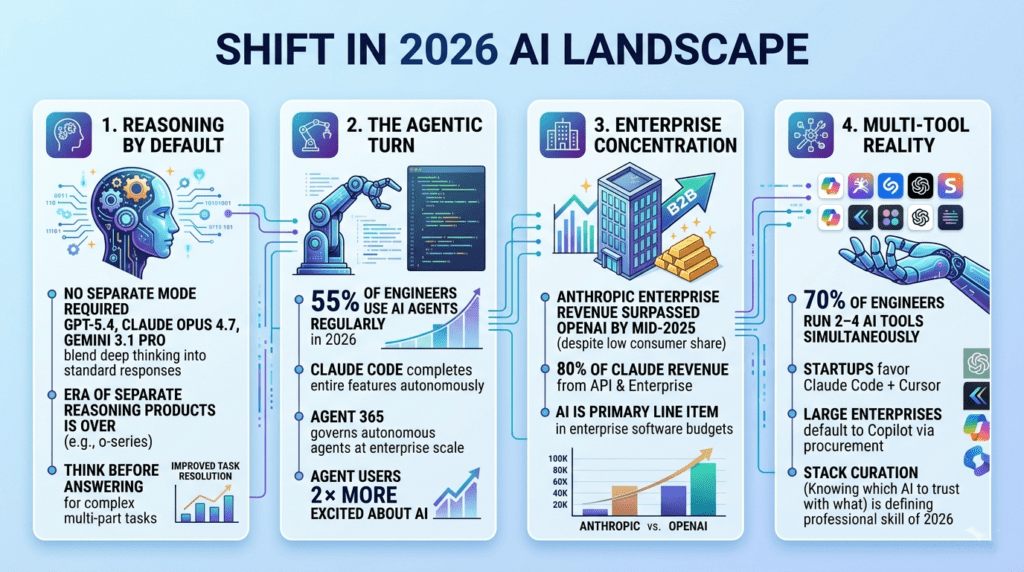
Engineers, writers, designers, analysts, and executives are all running AI somewhere in their workload, and many are using AI technologies to build AI stacks for most of their operational purposes. The frontier has shifted from assistants that answer questions to agents that complete finite tasks or even batch of tasks.
As of April 2026, the enterprise software ecosystem has undergone a paradigm shift with transitioning from generative AI models to autonomous agentic business architectures. The most pervasive AI frameworks and tools in 2026 are no longer limited to simple zero-shot completions; they now function as orchestration layers for multi-step, long-horizon task execution by integrating deep reasoning capabilities with native tool-use, these platforms act as the connective tissue in modern CI/CD pipelines, creative workflows and corporate intelligence suites.
1. ChatGPT (GPT-5.4)
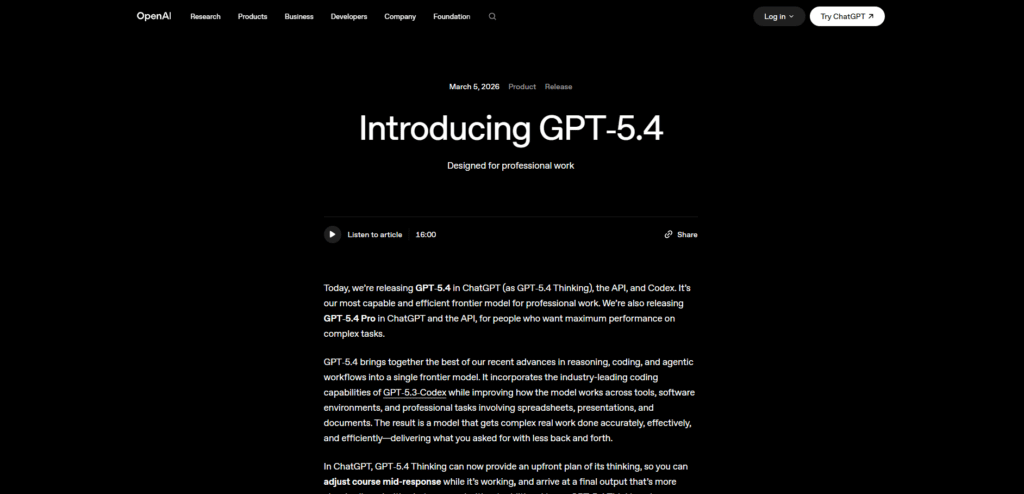
Released on March 5, 2026, GPT-5.4 unified OpenAI’s previously separate product lines into a single, cohesive reasoning engine. Its standout capability is native, built-in “computer use,” allowing the model to interact directly with desktop operating systems and orchestrate complex, cross-application workflows. The model employs a unified Mixture-of-Experts (MoE) architecture that dynamically allocates compute to specific sub-tasks, minimizing latency during complex, multi-step agentic workflows making it effective frontier model for some of the professional work.
With an 83% performance benchmark on GDPval and a 1-million-token context window in the API, it excels in deep professional knowledge work. The new Tool Search system allows for high-precision data retrieval from fragmented enterprise silos, replacing the need for bespoke agent frameworks. Professionals leverage GPT-5.4 to automate end-to-end research cycles, where the model plans, executes, and iterates on multi-step tasks autonomously.
2. Canva
Canva has solidified its role as a generative design middleware, utilizing multimodal latent diffusion models to bridge the gap between abstract natural language prompts and high-fidelity brand collateral. Canva’s “Magic Studio 3.0” includes autonomous layout engine updates which allow for real-time visual adjustments based on brand performance metrics. Its 2026 upgraded predictive design engines have become standard for enterprise marketing, enabling the automated generation of multi-platform campaigns while ensuring strict brand-guideline adherence and integrating autonomous layout adjustment, style transfer.
Latest version uses AI to minimize the friction of visual production, allowing customers to execute enterprise-grade creative assets at scale. This shift has fundamentally altered marketing ROI, reducing the time from conceptualization to deployment while enabling rapid iterative testing across regional markets.
3. Gemini (3.1 Pro)
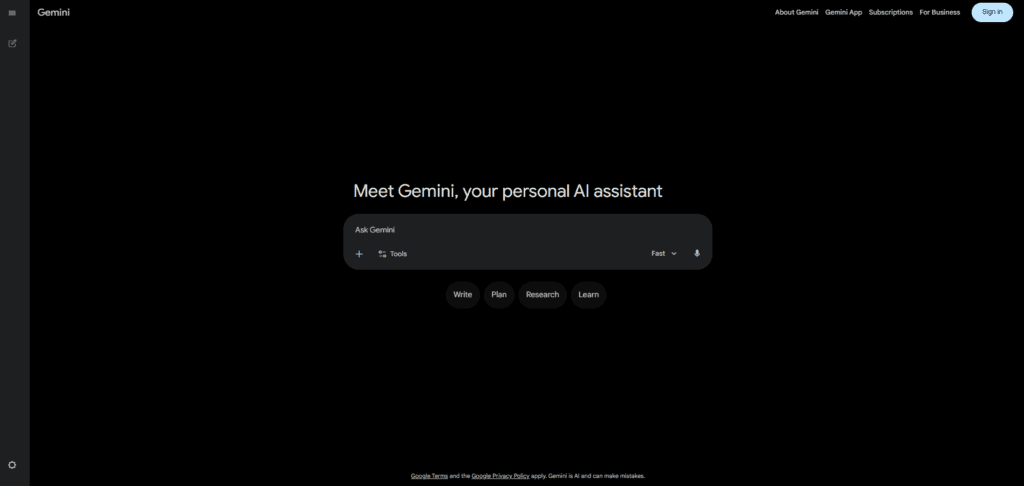
Gemini 3.1 Pro serves as the architectural standard for massive-scale multimodal reasoning and enterprise data ingestion. Its 1-million-token context window supports native processing of diverse data streams, including complex codebases, multi-layered legal contracts, and expansive video libraries. In security and audit use cases, it utilizes “Deep Think” capabilities to synthesize insights across petabytes of disparate data, identifying anomalies that remain invisible to traditional analytical methods. Its deep integration with Google Workspace turns static enterprise data into a queryable, active-knowledge system, functioning as a cognitive force-multiplier for cross-functional teams managing high-stakes strategic reviews and worflows.
4. Claude (Opus 4.7)
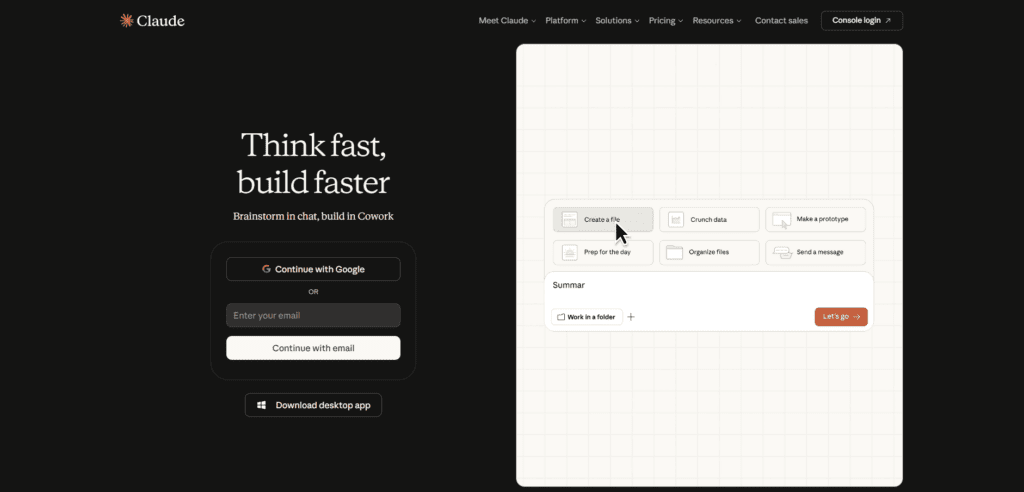
Claude Opus 4.7 is the premier choice for complex technical reasoning and code orchestration in 2026. Distinguished by its “adaptive thinking” and effort-control mechanisms, it manages complex, long-horizon projects with superior logical stability. Its integration of 1M context windows and 128K output capabilities enables the refactoring of massive legacy codebases where it manages interdependent logic that traditional models struggle to maintain. The model utilizes a refined reinforcement learning from AI feedback (RLAIF) pipeline, significantly reducing non-probabilistic hallucinations and ensuring high-fidelity outputs for complex audits.
Engineering teams utilize Opus 4.7 as a technical partner, leveraging its ability to execute multi-turn coding agents that plan, develop, and test software, thereby significantly increasing engineering velocity.
5. Grok

Grok has achieved market differentiation by prioritizing high-frequency, real-time data stream synthesis allowing it to integrate live market feeds and social telemetry directly into its contextual processing model. Unlike models those are tethered to static training data, Grok’s architecture is fundamentally tied to dynamic information flows, making it an essential utility for journalists, financial analysts, and market intelligence teams.
Its ability to cross-reference live trends, social sentiment, and macro-economic data allows users to maintain real-time situational awareness. It uses a high-frequency retrieval-augmentation layer that processes data streams at the sub-second level, ensuring that information remains synchronized with current market movements and real-world event flows. Corporate intelligence units use Grok to monitor emerging market risks and competitive maneuvers as they unfold, enabling proactive strategy adjustments rather than reactive responses in volatile trading environments.
6. DeepSeek
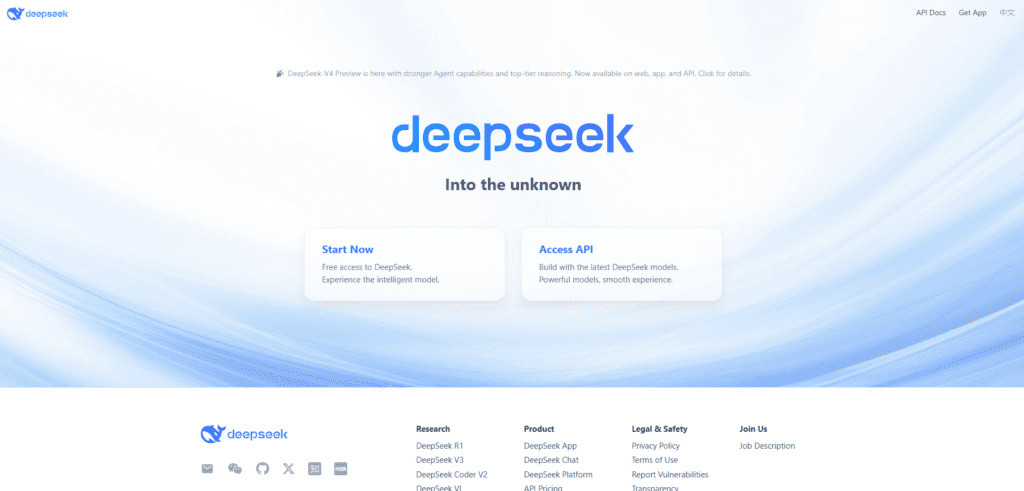
DeepSeek has emerged as a high-performance disruptor, optimized for computationally efficient, specialized reasoning tasks. They recently rolled out “Spec-Focus” inference, an optimization strategy that dynamically routes queries to exclusive paths within the model. By streamlining its inference path, it delivers state-of-the-art results for algorithmic optimization and mathematical modeling offering a high-performance-per-watt ratio unmatched by generalist models, making DeepSeek the preferred choice for data scientists facing strict latency or cost constraints. Its lean architecture provides high-octane performance without the computational bloat associated with broader, general-purpose models.
Engineering teams deploy DeepSeek for high-frequency algorithmic research, targeted intelligence delivering superior throughput intensive mechanisms and technical model with iterative cycles.
7. Perplexity AI
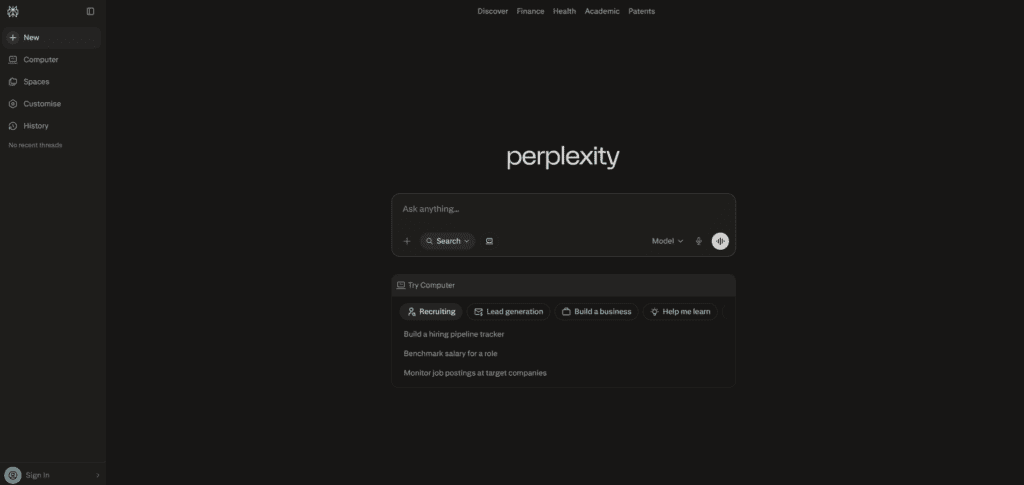
Perplexity AI 2026 “Truth Engine” has revolutionized information retrieval by mandating real-time verification using RAG (Retrieval-Augmented Generation) stack layer ensuring responses with citation-anchored and facts. Perplexity’s 2026 “Truth-Engine” update of all RAG outputs against a multi-source live-fact index. As the industry grapples with the veracity of generative content, Perplexity serves as an essential tool for strategic intelligence, evidence-based results and academic rigor in AI models having its synthesized insights traceable to its source.
Its capacity to parse complex, multi-part queries and suppress irrelevant noise makes it the primary research utility for strategic analysts, effectively transforming the investigative process from manual verification to verified automated knowledge acquisition.
8. Microsoft Copilot (Wave 3)
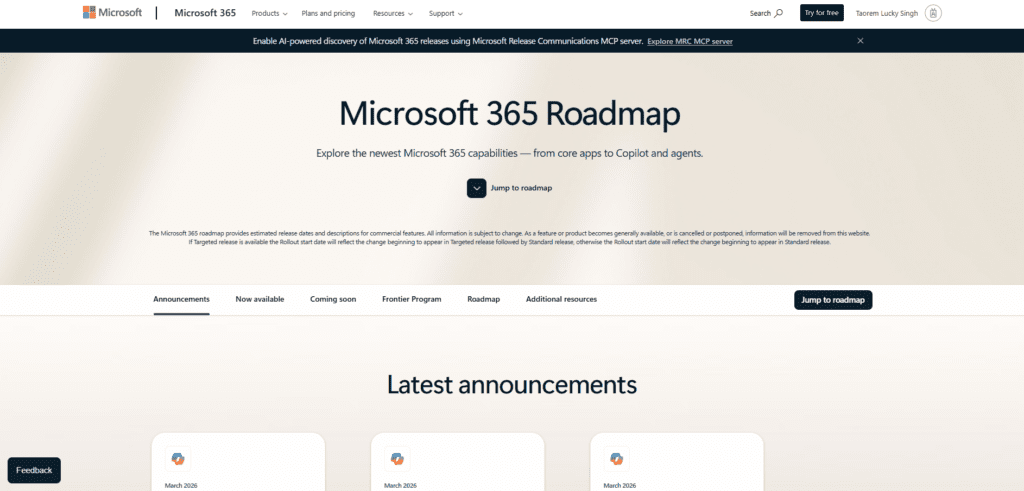
Microsoft Copilot (Wave 3) operates as the primary orchestration layer for the enterprise Microsoft 365 ecosystem. Through Wave 3’s “Agent 365” and “Cowork” frameworks, it enables the deployment of autonomous agents governed by enterprise-grade security and policy control operating within strict M365 data-governance boundaries. Copilot manages the administrative heavy lifting like summarizing meeting transcripts, automating financial reconciliations, managing budgets and coordinating cross-platform project workflows effectively serving as an always-on, resourceful, policy-compliant office co-worker.
Its AI multi-model architecture facilitates task optimization either of creative generation, analytical processing or more with certainty enterprise environment benefits from adaptive, context-aware assistance at every stage of the collaborative process.
9. Claude Code
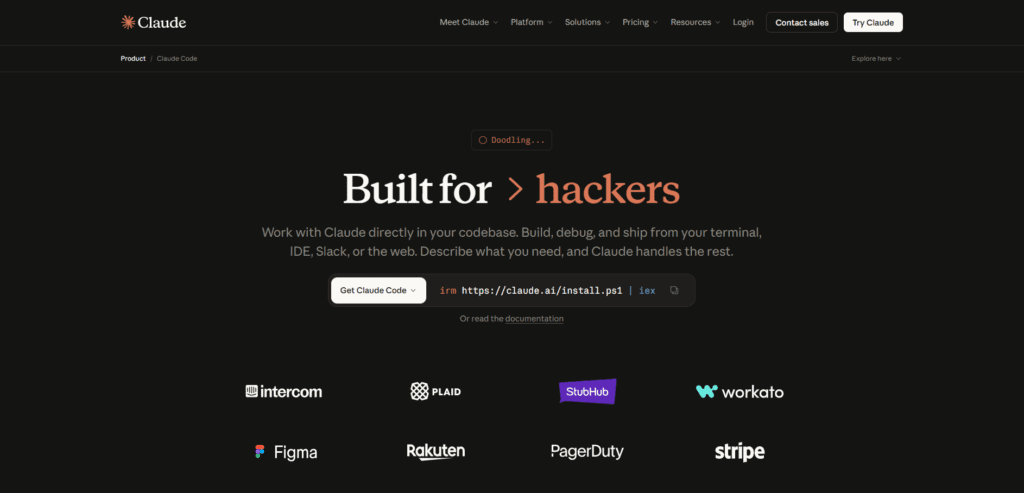
Claude Code operates as an integrated AI engineering layer designed to augment and partially automate the modern software development workflow. Built by Anthropic, Claude Code extends beyond traditional autocomplete tools by enabling agentic coding behaviors—where the system can interpret developer intent, navigate repositories, generate multi-file changes, and iteratively refine outputs within defined constraints. It functions less as a passive assistant and more as a controlled execution partner capable of handling complex development tasks end-to-end.
Through its conversational interface and tool-use capabilities, Claude Code can analyze existing codebases, propose architectural improvements, debug issues, and generate production-ready code aligned with project context. Its strength lies in contextual reasoning across large code scopes, allowing it to maintain coherence across interdependent files while adhering to established coding patterns and standards. This reduces fragmentation and minimizes the inconsistencies often introduced by isolated AI-generated snippets.
10. Cursor
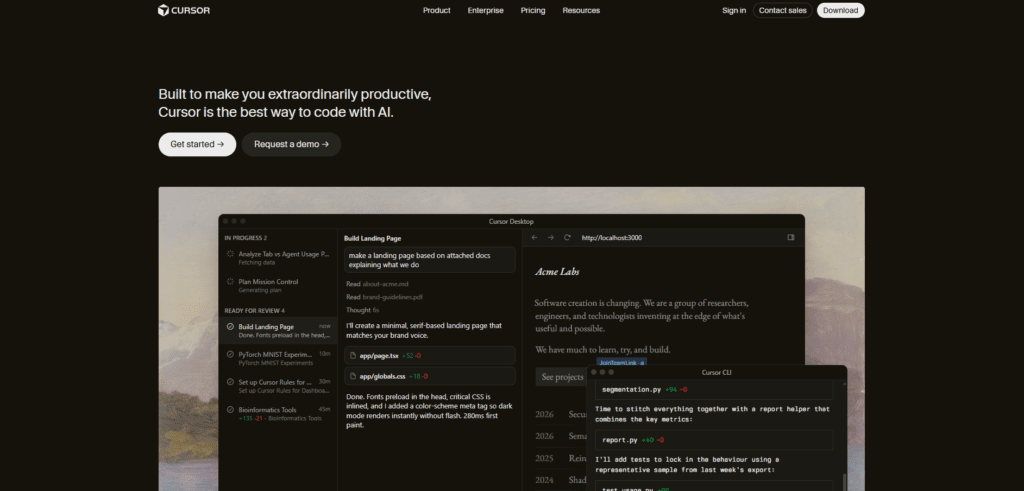
Cursor has redefined the modern software development lifecycle (SDLC) by embedding agentic-loop intelligence directly into the IDE. Cursor’s “Repository-Intelligence” update provides the IDE with native awareness of entire project dependencies, enabling multi-file refactoring based on natural language requests. By enabling conversational coding in IDE where the editor proposes, tests, and validates code snippets within a sandboxed environment before committing changes, effectively maximizing software shipping velocity and functionality. Its deep repository awareness ensures that generated code is structurally aligned with existing system patterns, reducing the technical debt typically incurred by AI-generated snippets.
Cursor is at the forefront of the shift toward conversational programming and serving as a critical advancement in software infrastructure tool for agile engineering teams looking to maximize their AI development journey.